During the day, if the sun shines, it can be quite warm, but as soon as Dažbog's disk hides behind the horizon, it can be quite cold outside.
In the old days, old grandmothers used to sit on the front porch and enjoy the last rays of the sun. This period used to be called GRANDMOTHER SUMMER. (BABIE LETO)
In fact, this part of the year got its name not so much because of the grandmothers in the front yard, but because it was a period dedicated to ROŽANICE.
ROŽANICE beads are known as judges who spin the threads of fate. It is at this time that tufts of fibers fly through the air, which were considered materialized fibers of fate
The ROŽANICE were mainly the goddesses Mokoš, Serča, Neserča, but they also include goddesses such as Lada, Podaga, Vesna, Oseň, Živa and even Morena.
Three judges appear not only in Slavic culture, but also among Nordic peoples such as the Norns, who were called Urd, Verdandi and Skuld. Among the Romans, they were Parks and had the names Nona, Decuma and Morta. The Greeks knew them as the three Moiri - Kloto, Lachesis, Atropos.
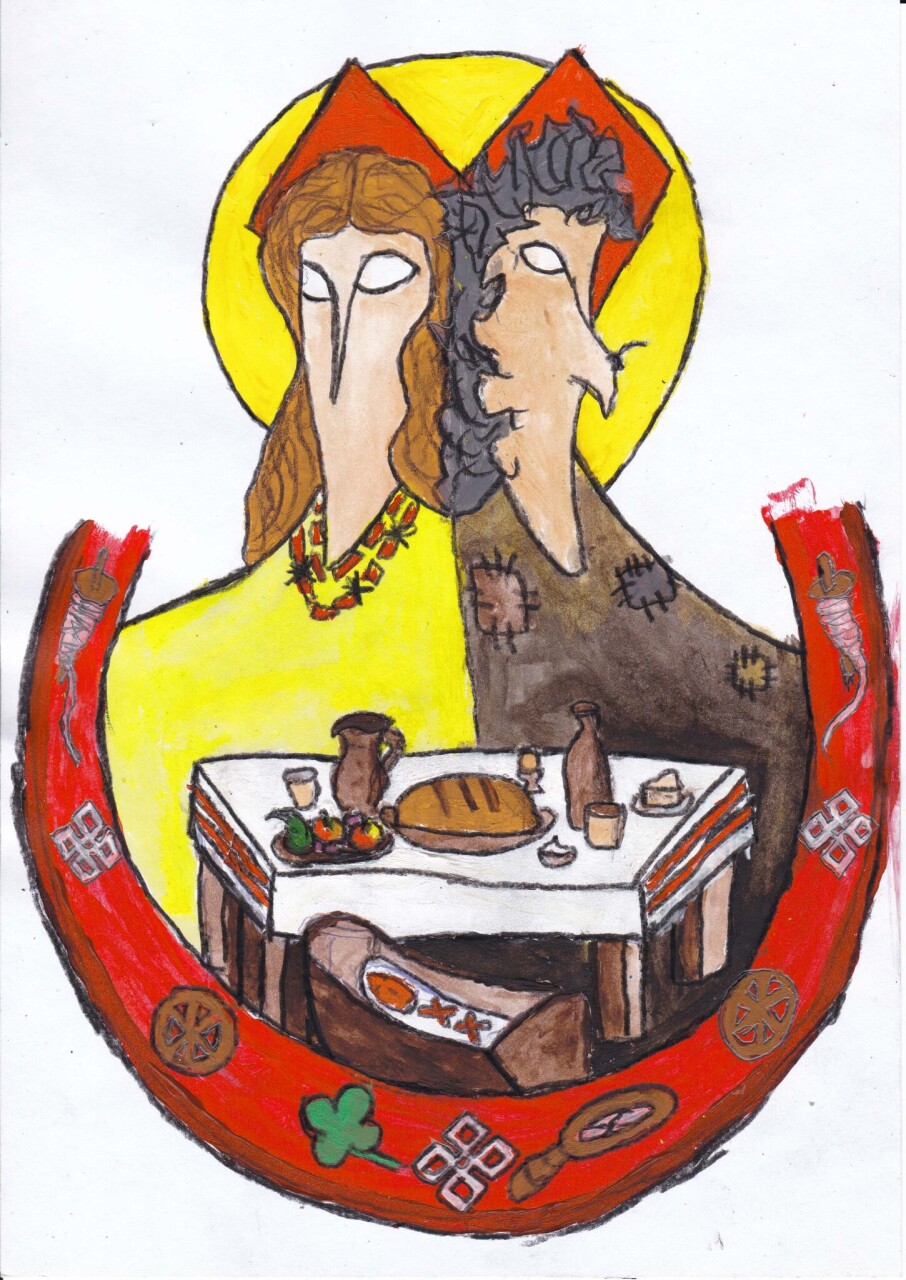
Slavonic Rožanice, also called Rodajnica, Sudica or Sudicka, like the goddesses of fate of other nations, were usually depicted as beautiful virgins, but often also as old women dressed in white robes decorated with jewels, but always with a spindle or spinning wheel. These female goddesses were believed to spin the threads of fate. The first of them spins the threads, the second measures and the third cuts them.
In order for our ancestors to honor the Rosary, a sacrificial table called a trapeze was built for them. A trapeze covered with a new tablecloth was also prepared for the birth of a child. Consecrated bread, salt, egg, honey, various goodies and fruits were placed on the festively laid table. There was also a jug with spring water and kvass. Wine or mead could also improve the fate of Rožanice.
Their sacred day was established on the ninth day before the autumnal equinox.
On this day, it was customary to thank the Rosary and the Family itself for the harvest, but also for the birth of the Almighty and the creation of man. Sacrifices were most often brought to the altar in the sanctuary and were the first pieces of the harvest or the first pieces from that year's farm.
To discover more about the deities of the Ancient Slavs, see my book
GODS OF OLD SLAVS